
Travel Guide
Travel industry pivots to ‘hushpitality’ as Gen Z demands frictionless service
May
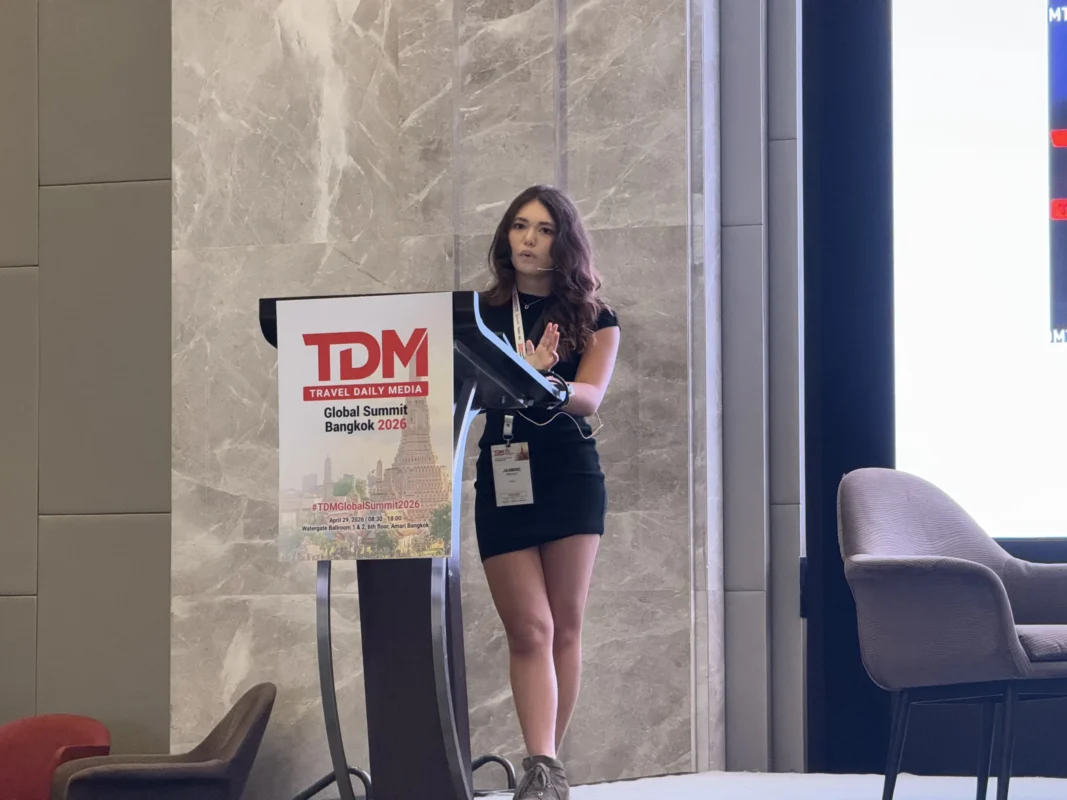
At simply 17, Jasmine Marshall, Gen Z Speaker and Ambassador on the IWTA, represents a era that’s quickly reshaping the worldwide journey panorama. She shared her refreshing perspective on the TDM Summit Bangkok 2026, held on the Amari Bangkok. Speaking to an viewers of seasoned industry professionals, she supplied a contemporary and candid perspective on how younger travellers understand journeys—not as a collection of bookings, however as an extension of their way of life. While earlier generations considered journey as an occasional escape, Gen Z sees it as important, with 74% contemplating it a non-negotiable a part of their lives by 2026.
The ‘Whycation’ Architect: How Gen Z is Re-Engineering Mainstream Travel
Jasmine Marshall highlighted a basic shift: Gen Z might not all the time be the first spenders but, however they’re the decision-makers, the influencers, and in the end the “architects” of recent journey experiences. Rather than in search of conventional holidays, they’re pushed by purpose-led journeys—what she calls ‘Whycations’—the place the motivation goes past leisure and faucets into deeper private that means and identification.
The Digital Command Center: Search and Transit
For Gen Z the journey begins months earlier than they pack. they dwell in a world of ‘social discovery.’ Using TikTook and Instagram as search engines like google to discover the unfiltered actuality of a vacation spot.
Post reserving telephones change into the ‘Remote Control’ for his or her lives. For Gen Z, an airline app is not only a boarding go; it’s their dashboard. She says: “We don’t want to juggle paper passports and plastic cards. 90% of my generation wants a single digital wallet for visas, payments, and IDs. In the Asian market, we’re already seeing the gold standard: Biometrics. We’d rather our face be our passport than have to show a physical document five times before we even reach the gate. To us, biometrics aren’t ‘scary’ or ‘futuristic’—they are the ultimate form of respect for our time.”
The Airport: From Barrier to Ecosystem
Airports, historically seen as transitional areas, are present process a metamorphosis within the eyes of Gen Z. Jasmine Marshall challenged the widespread notion that her era is diminishing the “human touch” in journey. Instead, she argued that inefficiency—not know-how—is the actual barrier to significant interplay.
She says: “You think we are anti-social. But the reality is that we view a manual check-in counter as an operational failure. Modern airports are becoming high-tech ecosystems where efficiency is the product. When an airport automates the ‘boring stuff’—security, ID checks, and bag drops—they give us back our ‘found time.’ Instead of standing in a 20-minute queue, we are browsing a local pop-up shop or sitting in a quiet wellness zone.”
This shift reframes effectivity as a core element of hospitality somewhat than its reverse. When friction is eliminated, it creates area for real, high-quality interactions. In this context, the airport evolves right into a dynamic ecosystem the place know-how enhances—not replaces—the human expertise.
The ‘Architecture of Feeling’: Designing Experiences That Inspire
As travellerss attain their vacation spot, the bodily atmosphere should ship on the promise set by digital discovery. For Gen Z, design isn’t just about aesthetics—it’s about emotion and immersion. Social media has skilled them to look past curated visuals, in search of authenticity in how areas really feel and performance in actual life.
She says: “We want to see how the morning light actually hits the lobby. Or most importantly, we want to see how the furniture frames the view—and whether the layout has that same immersive energy in real life that we saw in a 15-second reel. And this is where the industry has a massive opportunity to move beyond just ‘providing a room’ and start mastering what I call the ‘Architecture of Feeling’.”
She shared a private expertise at Milaidhoo within the Maldives, the place the considerate design, materials decisions, and spatial circulation created a profound psychological influence. The atmosphere did greater than present consolation—it impressed ambition, creativity, and a want for a extra refined way of life.
This degree of intentional design transforms areas into catalysts for private progress. Whether it’s a resort villa or an airline cabin, environments which are rigorously curated can form how visitors suppose, really feel, and even behave throughout their keep. For Gen Z, these emotional connections are much more precious than conventional luxurious markers.
Hushpitality: Redefining the Human Touch
While know-how performs a important function in shaping seamless experiences, the human aspect stays important—however in a redefined kind. Marshall coined the time period “Hushpitality” to describe the brand new normal of service: quiet, intuitive, and unobtrusive.
She provides: “In 2026, hospitality is defined by silent excellence. It’s the ability to be attentive but not intrusive, ensuring the guest feels prioritized without feeling watched. We don’t need grand gestures; we need intuition. It’s the team member who remembers your name without it feeling scripted, or the person who anticipates what you need before you even have to ask. It’s a balance of being present but giving us our autonomy. We value the ‘little details’—the handwritten notes and the genuine smiles—over the formal, rigid service of the past.”
Jasmine Marshall emphasised that the industry must move away from using the “human touch” as justification for outdated processes. Human interplay shouldn’t be wasted on transactional duties that may be automated. Instead, it must be elevated to moments of transformation—the place workers act as “experience curators and storytellers”, enriching the visitor journey in significant methods.
The Future is Frictionless, Purposeful, and Personal
Gen Z travellerss have grown up in a world of fixed connectivity, giving them a heightened sensitivity to authenticity. They place higher belief in actual tales and peer-driven content material than in conventional promoting. For manufacturers, which means that storytelling—not promoting—is the important thing to engagement.
She says: “That’s why we look to platforms like Travel Daily Media and yes—that’s a product placement. But it’s the truth: I’m a guest, and I’m telling you that my generation craves depth and we need to be inspired by stories such as these.”
Marshall concluded with a robust reminder: journey is now not nearly shifting folks from one place to one other. For her era, it’s about self-discovery. Destinations and experiences are valued for his or her capacity to form identification, encourage ambition, and create lasting reminiscences.
By eradicating friction, embracing “Hushpitality,” and designing emotionally resonant areas, the journey industry has the chance to play a far higher function than ever earlier than. It isn’t just about delivering companies—it’s about influencing views and shaping the worldview of the subsequent era.
She provides: “We are looking for the places and the people that help us figure out who we are. You aren’t just selling us a flight or a night in a villa; you are the architects of our most important memories. When you strip away the friction, when you lean into ‘Hushpitality,’ and when you design spaces that make us want to listen to jazz and dream bigger—you aren’t just running a business. You are shaping the worldview of the next generation.”
The future travellers, Jasmine Marshall famous, is already current—younger, observant, and discerning. She concludes by saying: “We are looking for the brands that understand our world. We are not just your next demographic; we are your next partners in defining what travel looks like for the next fifty years. We are ready to explore. The question is: are you ready to change the way you host us?”
